Office workers don’t wear hard hats or handle power tools—but that doesn’t mean they don’t need toolbox talks. The term “toolbox talk” traditionally belongs to construction and industrial settings, where teams huddle briefly to discuss safety protocols before starting work. But the core idea—short, focused, practical conversations about workplace risks and improvements—applies just as powerfully in an office.
Too many office environments assume safety and efficiency are automatic. Yet repetitive strain injuries, mental fatigue, poor ergonomics, and communication breakdowns are real workplace hazards. A well-run toolbox talk brings these issues into the open, giving office staff a voice and visibility into their shared work environment.
When done right, these brief meetings aren’t bureaucratic burdens—they’re catalysts for culture change.
Why Office Staff Need Toolbox Talks
Most people assume office work is inherently safe. But the absence of heavy machinery doesn’t mean the absence of risk. In fact, the risks in an office are often invisible until they escalate.
- Ergonomic strain: Hours at poorly set up desks lead to chronic back pain, carpal tunnel, and eye strain.
- Psychological stress: High workloads, unclear expectations, and poor team dynamics contribute to burnout.
- Slips, trips, and falls: Cluttered walkways, loose cables, and wet floors in kitchens or restrooms pose real dangers.
- Fire and evacuation preparedness: Many office employees don’t know emergency exits or shelter-in-place procedures.
- Cybersecurity awareness: Phishing attempts and data leaks often start with employee oversight.
A 10-minute weekly toolbox talk can uncover, prevent, or mitigate these risks before they become incidents. Unlike full-blown training sessions, these talks are lightweight, conversational, and actionable—making them ideal for busy office schedules.
More importantly, they signal that leadership cares about employee well-being—not just productivity.
What a Toolbox Talk for Office Staff Should Cover
Generic safety talks fail because they’re not relevant. Office staff tune out when content feels like it’s meant for warehouse workers. Instead, tailor your toolbox talk topics to the actual environment.
Here’s what works:
#### 1. Ergonomics and Workspace Setup Discuss proper chair height, monitor positioning, and keyboard alignment. Share photos of ideal setups. Encourage staff to audit their own stations.
Example: “Sarah noticed her neck pain started after switching monitors. After adjusting the height and adding a document holder, her discomfort reduced within two days.”
Tip: Offer a quick “5-minute desk check” handout: seat at knee level, top of screen at eye level, elbows at 90 degrees.
#### 2. Mental Health and Workload Management Normalize conversations about stress. Talk about workload planning, break schedules, and recognizing signs of burnout.
Common mistake: Assuming employees will speak up. Many won’t. Managers should lead by example: “I’m scheduling my lunch break—here’s why it helps my focus.”
#### 3. Fire and Emergency Evacuation Review evacuation routes monthly. Ask: “Who’s your buddy during evacuation? Where’s the nearest fire extinguisher?” (Yes, offices have them.)
Use case: During a recent drill, two employees realized their designated exit was blocked by storage. The toolbox talk that followed triggered a site-wide audit.
#### 4. Office Housekeeping Address cable management, clean desk policies, and kitchen etiquette. A tripping hazard in the break room is no joke.
Practical tip: Assign rotating “safety champions” each week to do a 5-minute sweep before the talk.
#### 5. Cybersecurity Awareness Cover password hygiene, spotting phishing emails, and secure file sharing.
Real example: An employee forwarded a fake “HR benefits update” email to IT. The toolbox talk that week highlighted her quick action—turning a near-miss into a teaching moment.
How to Run an Effective Toolbox Talk in the Office
Structure matters. Unstructured chats lose focus. Follow this framework to keep talks concise and impactful.
#### Step 1: Keep It Short Aim for 5–10 minutes. Schedule it at the same time weekly—e.g., Monday at 9:15 a.m. Consistency builds habit.
#### Step 2: Rotate the Facilitator Don’t let it always be the manager. Rotate among team members. This builds ownership and uncovers ground-level insights.
Pro tip: Provide a simple template: - Topic (1 sentence) - Why it matters (real office example) - One action step - Open floor for input (2 minutes max)
#### Step 3: Make It Interactive Ask questions. Encourage stories. Use quick polls: “Raise your hand if you’ve ever tripped over a cord in the office.”
Pass a “talking token” (a stress ball, badge, etc.) so quieter team members get space to speak.
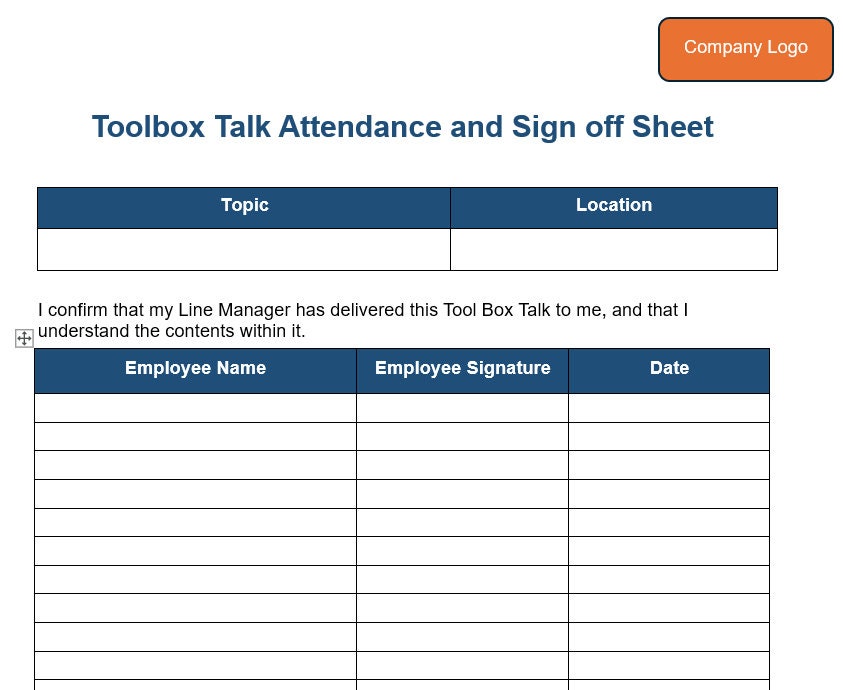
#### Step 4: Document and Follow Up Keep a shared log of topics and action items. Example:
| Date | Topic | Action Taken |
|---|---|---|
| Apr 5 | Cable tripping hazard | Installed cable covers by Apr 8 |
| Apr 12 | Eye strain from screens | Posted 20-20-20 rule reminder |
This shows employees their input leads to change.
#### Step 5: Measure Impact After three months, survey staff: - “Do you feel safer at work?” - “Has a toolbox talk helped you change a habit?” - “What topic should we cover next?”
Use results to refine your approach.
Common Mistakes to Avoid
Even well-intentioned teams sabotage their own toolbox talks. Watch for these pitfalls:
- Being too generic: “Let’s talk about safety” leads nowhere. Be specific: “Let’s fix the printer paper jams that cause back strain.”
- Talking at staff, not with them: Monologues kill engagement. Ask, “What’s one thing in the office that worries you?”
- Ignoring follow-through: If you note a broken chair but never replace it, trust erodes.
- Canceling “when busy”: This signals the talk isn’t important. Protect the time like any other critical meeting.
- Using jargon: Avoid phrases like “OSHA compliance” or “risk mitigation matrix.” Say, “Let’s stop people from tripping over cords.”
Practical Toolbox Talk Topics for Office Teams
Use this list as a rotating schedule. Each topic fits within 10 minutes and drives real behavior change.
- Keyboard and mouse posture – Prevent wrist strain with proper alignment.
- Taking real breaks – Why 5-minute walks beat staring at your phone.
- Emergency contact updates – Is your info in the system?
- Noise and focus – Headphones, quiet zones, and meeting etiquette.
- Printer and supply safety – Lifting paper reams, handling jams safely.
- Clean desk policy – Reducing clutter and fire risks.
- Mental health check-in – Normalizing conversations about stress.
- Water and hydration – Dehydration causes fatigue and headaches.
- Access control – Who can enter restricted areas? Badges on?
- Reporting near-misses – A stumble, a glitch, a suspicious email—speak up.
Rotate through these every few weeks. Revisit based on incidents or feedback.
Integrating Toolbox Talks into Office Culture For lasting impact, weave toolbox talks into existing workflows.
- Start team meetings with one: Replace “any announcements?” with a focused safety or wellness topic.
- Link to onboarding: New hires attend their first talk on Day 1. It signals that well-being is part of the culture.
- Celebrate small wins: “Thanks to Maria’s suggestion, we now have cable trays under every desk.”
- Use visuals: Post infographics near elevators or kitchens—e.g., “The 20-20-20 Rule: Every 20 minutes, look 20 feet away for 20 seconds.”
- Involve facilities and HR: They can supply resources—ergonomic assessments, mental health toolkits, fire wardens.
When these talks become routine, they stop feeling like “compliance” and start feeling like care.
Real-World Impact: A Case Study
A mid-sized marketing firm in Manchester introduced toolbox talks after two employees reported wrist pain and one had a panic attack during a tight deadline.
They started with biweekly 10-minute sessions. Topics included: - Setting up dual monitors - Managing deadline stress - Kitchen safety (microwave explosions are real)
Within two months: - 78% of staff reported taking more frequent breaks - Repetitive strain complaints dropped by 60% - Employee Net Promoter Score (eNPS) rose by 22 points
More telling: team leads began copying the format for project check-ins. The culture shifted from “push through” to “pause and reflect.”
Final Thoughts: Make It Human
Toolbox talks for office staff work best when they’re grounded in real experience—not corporate mandates. The goal isn’t perfection. It’s awareness. It’s dialogue. It’s showing up for each other.
Start small. Pick one topic. Gather your team. Ask one question: What’s one thing we could improve this week to make work safer or easier?
Listen. Act. Repeat.
That’s how you build a workplace where people don’t just survive—they thrive.
FAQ
What should you look for in Toolbox Talk for Office Staff: Why It Matters and How to Run One? Focus on relevance, practical value, and how well the solution matches real user intent.
Is Toolbox Talk for Office Staff: Why
It Matters and How to Run One suitable for beginners? That depends on the workflow, but a clear step-by-step approach usually makes it easier to start.
How do you compare options around Toolbox Talk for Office Staff: Why It Matters and How to Run One? Compare features, trust signals, limitations, pricing, and ease of implementation.
What mistakes should you avoid? Avoid generic choices, weak validation, and decisions based only on marketing claims.
What is the next best step? Shortlist the most relevant options, validate them quickly, and refine from real-world results.