
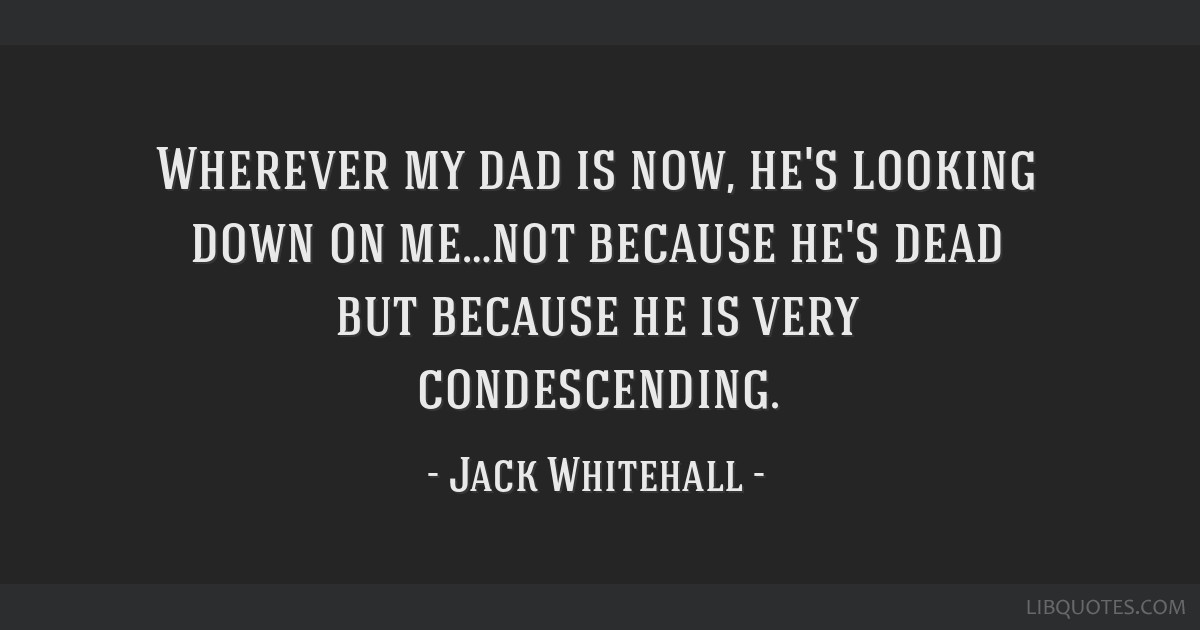
Jack Whitehall’s dry, self-aware humor often masks sharp insights into human behavior. When he says, “I’m sure wherever my dad is, he’s looking down on us. He’s not dead—just very, very disappointed,” it lands as a punchline. But peel back the laughter, and you uncover layers about honesty, workplace dynamics, and the universal fear of judgment—all framed through the lens of a comedian who turns familial tension into cultural commentary.
This quote isn’t just a throwaway bit from a stand-up set. It’s a recurring motif in Whitehall’s work, especially in his travel documentaries with his father, Michael Whitehall. The line captures a dynamic millions recognize: the gap between who we are and who our parents—or bosses, or peers—expect us to be. And in that gap lies a surprising well of truth about modern work culture and personal integrity.
Let’s break down why this quote endures—and what it quietly teaches about honesty, performance, and the roles we play every day.
The Genius of Misplaced Reverence
At its core, the quote plays with a common cultural phrase: “He’s looking down on us.” Usually, that’s reserved for the deceased—angels, ancestors, lost loved ones watching benevolently from beyond. Whitehall flips it. His father is very much alive, yet emotionally and psychologically above him—observing, judging, unimpressed.
That inversion is where the humor—and the insight—begins.
In real life, we often treat authority figures the same way. Managers, mentors, even clients—we imagine them “looking down” on us, assessing our choices, waiting to react. The difference? Most of us wouldn’t dare say it out loud.
Whitehall does. And in doing so, he exposes a silent truth: many workplace cultures run on unspoken performance anxiety. Employees don’t just deliver results—they perform compliance, confidence, and competence, even when they’re faking it.
“I’m not dead—just very, very disappointed” isn’t just about a dad. It’s the internal monologue of every manager who sighs at a sloppy report, every parent who watches their kid take a risk, every leader who wonders if their team is trying or just pretending.”
The quote works because it’s relatable. We’ve all felt—accurately or not—like someone important is silently judging us. Whitehall gives that feeling a voice, and in doing so, makes it easier to confront.
Honesty Through Comedic Deflection
Whitehall doesn’t deliver hard truths straight on. He wraps them in absurdity. That’s his signature move.
When he jokes about his father’s disapproval, he’s actually talking about emotional distance, generational disconnect, and the pressure to meet unrealistic expectations. But because it’s funny, we let our guard down. We laugh—then realize we’re laughing at something painfully familiar.
This is a masterclass in how humor can bypass resistance to honesty.
In corporate settings, brutal truths often get buried under jargon and niceties. Feedback is “softened.” Conflict is avoided. But what if we borrowed Whitehall’s approach? What if leaders used humor—not to deflect responsibility, but to make hard conversations possible?
Consider this: A manager says, “I’m not dead, but I can already tell this presentation is going to disappoint me.” It’s a joke. But it signals: I see the flaws. I expect better. Let’s fix it.
Humor becomes a tool for candor. It reduces defensiveness. It keeps the conversation human.
Whitehall’s comedy reminds us: honesty doesn’t have to be harsh to be effective. Sometimes, the best way to tell the truth is to make people laugh first.
Work Culture and the Performance of Perfection
Watch any Jack Whitehall special, and a pattern emerges: he’s always trying—and failing—to impress his father. Whether it’s attempting extreme sports, navigating foreign cultures, or simply making conversation, the underlying tension is performance.
Sound familiar?
In today’s work environments, employees are under constant pressure to perform. We curate our LinkedIn posts, polish our Zoom backgrounds, and rehearse our “elevator pitches.” We don’t just work—we perform versions of ourselves that align with company culture, leadership expectations, or industry norms.
Whitehall’s relationship with his dad is a metaphor for that dynamic.
- He’s not being seen for who he is—but for how well he plays the role.
- His failures aren’t just mistakes—they’re personal disappointments to someone whose approval he craves.
- The emotional toll isn’t from effort, but from the gap between authenticity and expectation.
This mirrors modern workplace burnout. People aren’t collapsing from overwork alone—they’re exhausted from emotional labor, from pretending to be consistently confident, aligned, and enthusiastic.
The quote—“he’s not dead, just very, very disappointed”—captures that emotional weight. It’s not about mortality. It’s about feeling perpetually insufficient in the eyes of someone who matters.
Leaders should hear this. If your team feels like they’re constantly “under observation,” waiting for the verdict, you’re fostering anxiety, not excellence.
Better to say: “I see the effort. I see the missteps. Let’s talk about both.” Normalize imperfection. Reward honesty over polish.
The British Class System, Subtext, and Emotional Withholding
Whitehall’s comedy doesn’t just explore father-son dynamics—it dissects British culture.
His father, Michael, is the quintessential British upper-class gentleman: reserved, impeccably dressed, emotionally distant. Jack, meanwhile, is the anxious, verbose, emotionally expressive millennial son trying to bridge the gap.
Their dynamic isn’t just familial—it’s cultural.
The phrase “he’s not dead, just very, very disappointed” is dripping with subtext. In British culture, especially among older generations, disapproval is rarely stated outright. It’s conveyed through silence, raised eyebrows, or dry remarks. Emotion is managed, not expressed.
This emotional withholding shapes workplace norms across the UK—and beyond.
In many corporate cultures, feedback is indirect. Conflict is avoided. People don’t say “this is wrong”—they say, “Interesting approach.” The message is felt, not spoken.
Whitehall’s quote shines a light on this. It makes the unspoken spoken. And in doing so, it invites us to ask: Are we creating environments where people have to decode disappointment—or can they hear it clearly, without fear?
The healthiest teams aren’t those without criticism. They’re the ones where feedback is direct, kind, and decoupled from personal worth.
Human Nature: The Fear of Judgment and the Need for Approval
At the heart of the quote is a universal human fear: not being enough for someone whose opinion matters.
Whether it’s a parent, a boss, a partner, or society at large—we all carry an internal “judge.” And we spend enormous energy trying to appease them.
Whitehall turns this insecurity into comedy. But the emotion behind it is real.
In the workplace, this fear manifests in: - Employees avoiding innovation (what if the boss disapproves?) - Teams withholding ideas (will I look foolish?) - Leaders projecting confidence they don’t feel (I can’t show weakness)
The irony? The people we imagine judging us are often too wrapped in their own insecurities to care as much as we think.
Michael Whitehall may wear a look of quiet disapproval, but Jack’s act reveals something deeper: even the “judges” are human. They have doubts. They make mistakes. They’re just better at hiding them.
The lesson? Stop performing. Start connecting.
When we admit uncertainty, we give others permission to do the same. When leaders say, “I don’t have all the answers,” it doesn’t weaken authority—it builds trust.
Turning Comedy into Cultural Insight: Practical Takeaways
So what can we actually do with this quote beyond laughing at it?
Here are four real-world applications:
1. Normalize Humor in Feedback Replace sterile performance reviews with conversational check-ins. A little humor—like “I’m not dead, but I can see this timeline is going to disappoint me”—can make feedback feel collaborative, not punitive.
2. Audit Your Emotional Transparency Are people in your team afraid to speak up? Do they wait for cues before sharing opinions? That’s a sign of a “disapproval culture.” Encourage questions. Reward candor. Make silence louder than feedback.
3. Recognize the Performance Tax Employees spend mental energy managing impressions. Reduce it by valuing effort over polish, progress over perfection. Celebrate learning, not just results.
4. Flip the Script on Authority Instead of letting leaders be distant “judges,” humanize them. Share struggles. Admit mistakes. Let people see the person behind the title.
Jack Whitehall’s comedy works because it’s true. And truth, even when wrapped in sarcasm, has power.
Final Thought: Laughter as a Lens for Truth
Jack Whitehall doesn’t offer life lessons in the way gurus do. He doesn’t stand on a stage and preach about resilience or purpose. Instead, he trips over his words, mocks his own privilege, and jokes about his dad’s disappointment.
And in that messiness, we see ourselves.
The quote “I’m sure wherever my dad is, he’s looking down on us. He’s not dead—just very, very disappointed” is more than a punchline. It’s a mirror.
It reflects our fears of judgment. It reveals the absurdity of emotional repression. It critiques the performance culture we’ve built—at work, at home, in life.
So next time you feel like someone’s silently judging you, laugh. Then ask: Are they really disappointed? Or am I just scared of not being enough?
Because sometimes, the best way to confront human nature isn’t through a seminar or a self-help book—but through a comedian who knows that the truth is funnier when it hurts a little.
FAQ
What is Jack Whitehall’s most famous quote? One of his most repeated lines is: “I’m sure wherever my dad is, he’s looking down on us. He’s not dead—just very, very disappointed.” It’s become a signature blend of familial humor and self-deprecation.
Why does Jack Whitehall joke about his dad? His comedy explores their emotionally reserved relationship. The jokes highlight generational differences, British stoicism, and the pressure to meet parental expectations.
Is Jack Whitehall’s dad actually disappointed in him? No—it’s comedic exaggeration. Michael Whitehall has supported Jack’s career, but the “disappointed dad” persona underscores their contrasting personalities.
How does Jack Whitehall use humor to discuss serious topics? He wraps truths about family, class, and insecurity in absurdity. This makes tough emotions easier to confront—both for him and his audience.
What can leaders learn from Jack Whitehall’s comedy? Leaders can use humor to soften feedback, reduce performance pressure, and foster honesty. Laughing at imperfection makes it safer to be human at work.
Does the quote apply to workplace culture? Absolutely. The fear of silent judgment—from bosses, peers, or systems—mirrors Whitehall’s joke. Healthy cultures replace silent disapproval with open communication.
Where did the quote originate? It’s a recurring line in Jack Whitehall’s stand-up routines and Netflix travel series “Jack Whitehall: Travels with My Father,” where he tours the world with his dad, Michael.
FAQ
What should you look for in Jack Whitehall's Quote of the Day: Humor, Honesty, and Human Truths? Focus on relevance, practical value, and how well the solution matches real user intent.
Is Jack Whitehall's Quote of the Day: Humor, Honesty, and Human Truths suitable for beginners? That depends on the workflow, but a clear step-by-step approach usually makes it easier to start.
How do you compare options around Jack Whitehall's Quote of the Day: Humor, Honesty, and Human Truths? Compare features, trust signals, limitations, pricing, and ease of implementation.
What mistakes should you avoid? Avoid generic choices, weak validation, and decisions based only on marketing claims.
What is the next best step? Shortlist the most relevant options, validate them quickly, and refine from real-world results.